
Lamasoft:
The Jeff Minter Story
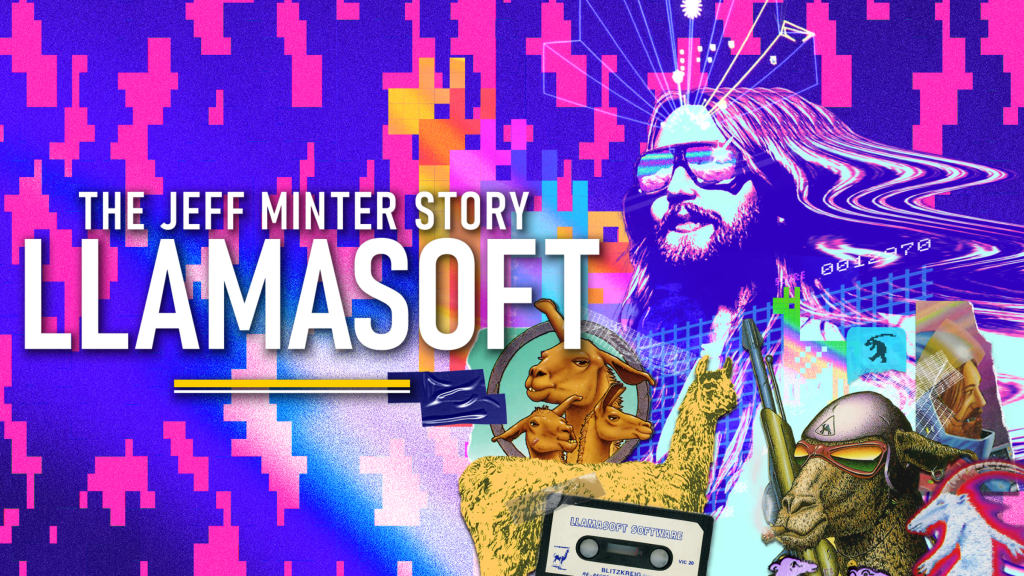
Digital Eclipse, 2024
My personal game history has a lot of PC gaming in it, up to a point, that point being really like the year 2000 or so, when I went through a decent length period of not having a gaming PC. That PC gaming, much though I didn’t know it at the time, was limited to mostly American games, due in no small part to what kinds of hardware were available to me. Which made Lamasoft: The Jeff Minter Story all the more interesting, as it documents the British PC gaming bedroom development world of the 1980s that I never got to live firsthand.
Playing through a bunch of old Jeff Minter games, with his strange versions of reality and aesthetic obsessions, is a good time in general, but what interested me more in this compilation was experiencing the alternate history of a whole world, one I could have never been a part of, but which felt so familiar to me. Due to the nature of his work as a programmer/developer/consultant through most of the 1980s, my dad was around a lot of the nascent culture of PCs in the US, and by extension, so was I. Which meant I was around so many weird nerdy guys who found connections to the world more through their work on PCs and the comradery that work brought them than anything else. It also meant that pictures like this:
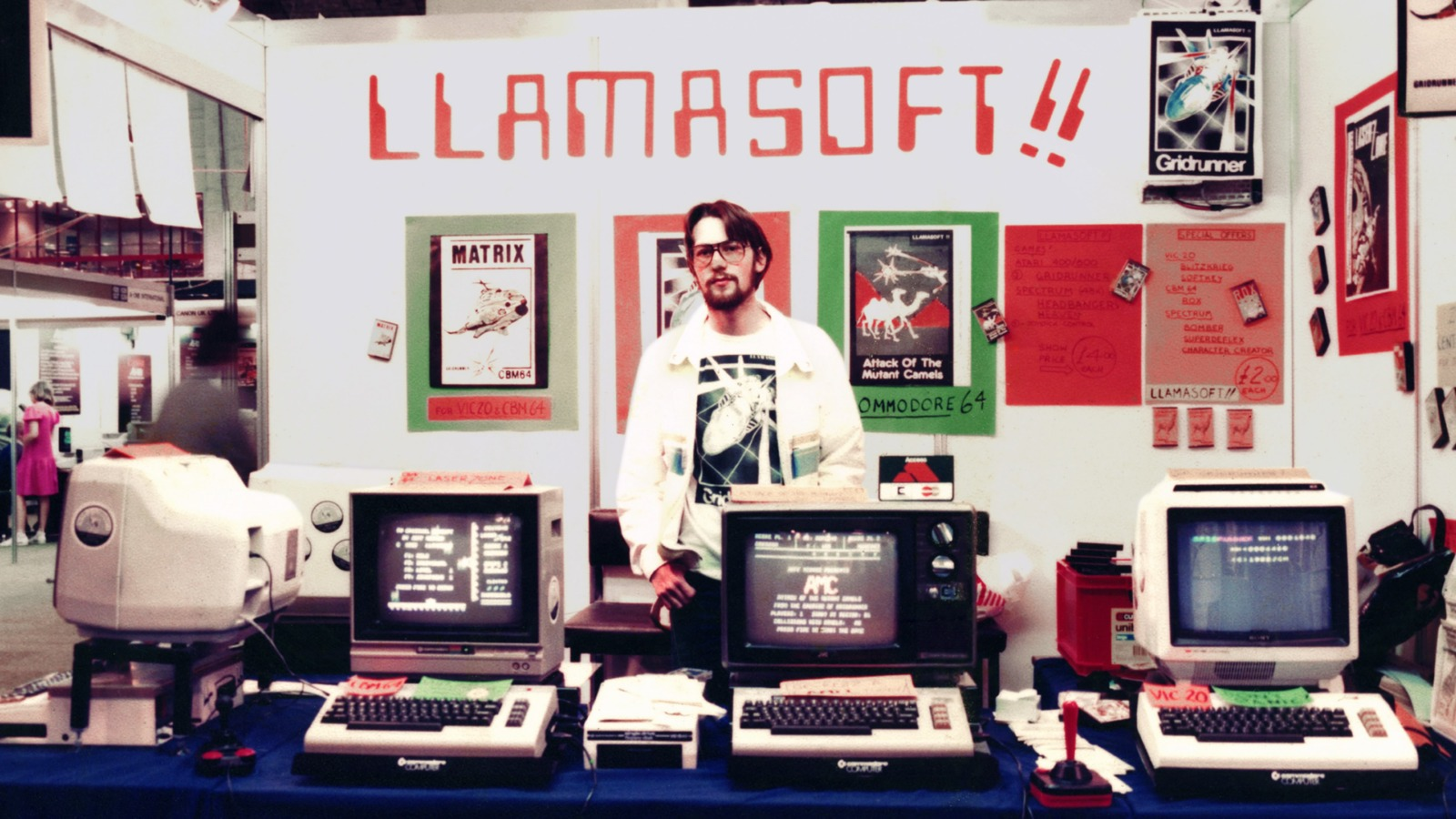
felt way too familiar, even is they were from across an ocean and running on hardware I probably never touched. I can say “probably” there because a kid I grew up with did have a Commodore 64, so that is the possible exception.
If you’ve listened to Hinge Problems in the past, you know we are not always fans of the whole “auteur theory” ideal around videogames. So many people are involved in the production of most games that to pin their whole aesthetic identity on one person seems reductive at best. Some of the most widely hailed game “auteurs” simply do not work at the same level without numerous other collaborators. For as much as everyone loves Hideo Kojima (the easiest example), the games he has helped create would not be the same without Yoji Shinakawa’s art design.
With all that in mind, Minter might be the closest thing to an auteur that well-known games have, which isn’t really meant as an aesthetic judgement (though many will often take it as such), as much as an acknowledgment that his games have, from the start, always felt like the creations of his particular ideas of what games should be, and are rarely compromised by any desire to be for anyone other than himself.
That being said, one of the things I appreciate about this compilation, which includes extensive interviews with him, is that it is openly acknowledged how so many other people helped him along the way, from familial financial support to collaborators who helped his development. Minter seems to not want to be the sole person credited with his success, and that’s admirable, especially given how quickly such solo auteur-ism is used as a marketing cudgel in modern gaming (even or especially in indie gaming; see how many articles are written about the Stardew Valley developer doing it “all on his own” while ignoring that he had the financial support of a partner who covered his unemployment for several years while he made the game). And while it’s pretty easy to see this collection attempting to do the same thing for Minter (see: the title of the whole thing), it’s valuable that the whole thing tries to at least complicate that idea a bit.
For me, though the games themselves held a lot of my attention, it was the ephemera around them that was so fascinating. The pictures like the above of Jeff and his dad working the booths at conventions. The reproductions of all of the Lamasoft news letters, which detailed Jeff’s life and thought processes almost more than the games themselves. All the material generated by a life that isn’t the life itself, but documents what it was like to live that life, who that person was, what that culture they lived in was like.
In April of 2023, my mom died.
It was somehow both a long slow decline, starting years before at a variety of moments I could detail but won’t, and a rapid descent, lasting a little over a hellish week in hospice that felt like it would never end but also refused to last. I dance around writing about it too much, because it still hurts a ton, over a year and a half later.
In the aftermath of her death, I found so many documents written by her. Half-full notebooks used as journals for her private thoughts. A hard drive full of pictures taken when she was still mobile enough to go out with her camera to see the world. Countless Word docs full of poetry and short pieces of nonfiction she would write when she felt like it. The ephemera of her life, all there for me to see. I would also listen to audio recordings I had made of her in 2017/18, telling me the story of her life and what she thought about it all.
All of this was her collection, The Linda Brandenburg Story. I haven’t had time to sort through it all and try to make it a coherent piece like this, but playing Llamasoft The Jeff Minter Story made me think a lot more about doing that.
I should probably write about what it feels like to play Minter games here, but I almost think that is too personal experience to bother detailing much. The games themselves are easy enough to access, either in this collection or any of the individual games that he has worked on. Go play Tempest 4000 or Ankh Arrh or Polybius and see how you feel. How do you react to the weird internal logic his games have, the clear nods to psychedelia, the abundant used of aesthetic overload as a design decision. Maybe they aren’t for you, and as this collection seems more than happy to say, that is OK. These games are for Minter and his people first, and anyone else is more than welcome to join, but not necessary.
And that too makes me return to my mom. She lived for herself, and for those she loved and cared about. This isn’t to say she didn’t care for the rest of the world, as she very much did, but she also was not a person to let that world dictate how she felt or what she did any more than she absolutely had to. She would not have liked Llamasoft games; she prefered slower turn-based stuff (so many hours of Civilization) or puzzle games. But she would have appreciated that he worked on games just for that things he liked. She valued that kind of independence.
- iYear of the SaGa
- Dragon’s Dogma II
- Gran Turismo 7
- Old Compile Games
- Lunar: The Silver St
 Hinge Problems
Leave a comment